A-Z Natural Honey has the freshest Honey in town.....!
 | About UsDelicious, healthy, affordable and fresh food for you and your family. That's what's on our menu – and we are glad you've stopped by for a little taste. People have been using honey for thousands of years as a home remedy for things like aiding digestion and calming a cough. Because of its high sugar content
and other antimicrobial effects, honey also has the ability to kill
many kinds of bacteria, and (by forming a moist environment) can speed
the healing of wounds and minimize scarring. However, with the emergence of antibiotics,
natural remedies like honey have fallen by the wayside as modern drugs
become the treatment of choice to tackle wounds and infections. |
Philosophy
 Raw honey is the concentrated nectar of flowers that comes straight
from the extractor; it is the only unheated, pure, unpasteurized,
unprocessed honey. An
alkaline-forming food,
this type of honey contains ingredients similar to those found in
fruits, which become alkaline in the digestive system. It doesn't
ferment in the stomach and it can be used to counteract acid
indigestion. When mixed with ginger and
lemon
juices, it also relieves nausea and supplies energy. Raw honey is the
healthiest choice amongst the various forms of honey as it has the most
nutritional value and contains amylase, an enzyme concentrated in flower
pollen which helps predigest starchy foods like
breads.
Raw honey is the concentrated nectar of flowers that comes straight
from the extractor; it is the only unheated, pure, unpasteurized,
unprocessed honey. An
alkaline-forming food,
this type of honey contains ingredients similar to those found in
fruits, which become alkaline in the digestive system. It doesn't
ferment in the stomach and it can be used to counteract acid
indigestion. When mixed with ginger and
lemon
juices, it also relieves nausea and supplies energy. Raw honey is the
healthiest choice amongst the various forms of honey as it has the most
nutritional value and contains amylase, an enzyme concentrated in flower
pollen which helps predigest starchy foods like
breads.
Most of the honey found in the supermarket is not raw honey but "commercial" regular honey, which has been pasteurized (heated at 70 degrees Celsius or more, followed by rapid cooling) and filtered so that it looks cleaner and smoother, more appealing on the shelf, and easier to handle and package. Pasteurization kills any yeast cell in the honey and prevents fermentation. It also slows down the speed of crystallization in liquid honey. On the downside, when honey is heated, its delicate aromas, yeast and enzymes which are responsible for activating vitamins and minerals in the body system are partially destroyed. Hence, raw honey is assumed to be more nutritious than honey that has undergone heat treatment.
Characterized by fine textured crystals, raw honey looks milkier and contains particles and flecks made of
bee pollen, honeycomb bits,
propolis, and broken bee wing fragments. Raw and unfiltered honey is relatively low in moisture content (14% to 18%) and has a high
antioxidant
level. It will usually granulate and crystallize to a margarine-like
consistency after a month or two. Many people prefer to spread it on
bread and waffles, dissolve it in hot coffee or
tea, or use it for cooking and baking. 
Among manufacturers there exists no uniform code of using the term "raw honey". There are no strict legal requirements for claiming and labelling
honey as "raw". You may also find raw honey that are unprocessed but
slightly warmed to retard granulation for a short period of time and
allow light straining and packing into containers for sale. Using as
little heat as possible is a sign of careful handling.
Forms of honey
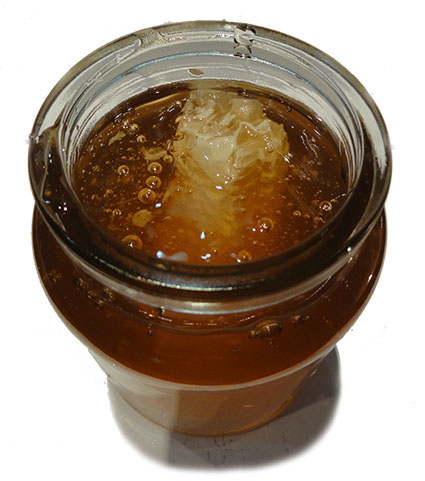
Honey comes in a number of physical forms, and understanding the variety will certainly help you pick a more appropriate form from the supermarket when you wish to combine honey with other ingredients used in the preparation of foods. Try out the various forms and tastes of honey when you have the chance!1. Comb Honey:
It is difficult to find comb honey nowadays, but sometimes you can find a jar of liquid honey to which a piece of cut comb has been added. Before the invention of honey extracting device, honey is mostly produced in the form of comb honey. Today, very little honey is produced as comb honey.
Comb honey is raw pure honey sections taken straight from the hive – honey bees' wax comb with no further handling at all. It is the most unprocessed form in which honey comes -- the bees fill the hexagon shaped wax cells of the comb with honey and cap it with beeswax. You can eat comb honey just like a chewy candy. Because the honey in the comb is untouched and is deemed to be pure, honey presented in this form comes with a a relatively higher price tag.
Read about my very first encounter, first bite of honeycomb.
2. Liquid honey:
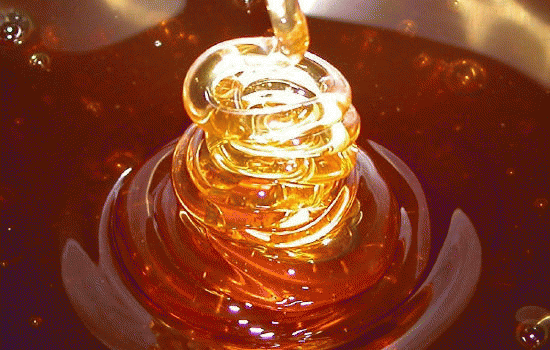
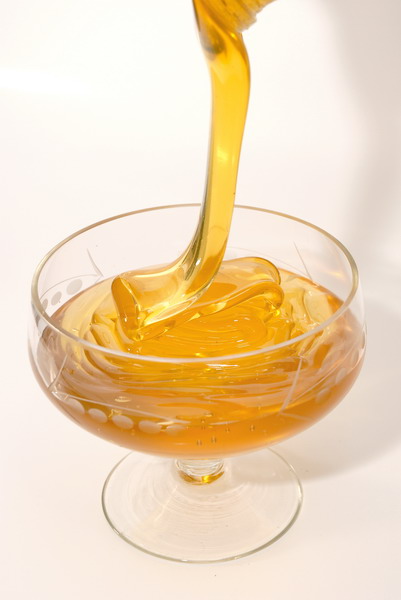
You can easily find this honey everywhere. As it seems, this is the most common form of honey in most places, and thus most familiar to consumers.
Clear, liquid honey can be raw or pasteurised. It has been filtered to remove fine particles, pollen grains, and air bubbles after being extracted from the honey comb by centrifugal force or gravity. Because liquid honey mixes easily into a variety of foods, its uses are diverse. It is used as a syrup for pancakes and waffles and in a wide variety of recipes, and it's especially convenient for cooking and baking.
3. Cream honey:

If you are one of those who complain that honey is messy to use, cream honey, which is also known as whipped honey, spun honey, granulated honey, or honey fondant, would be an excellent alternative to liquid honey. Cream honey does not drip like liquid honey, has a smooth consistency and can be spread like butter.
Honey is creamed by having one part finely granulated honey blended with nine parts liquid honey. The mixture is then placed in cool storage to promote rapid granulation and produce a small crystal structure that results in a smooth creamy texture. - hence creamed honey. The precisely controlled crystallisation process also lightens the color of honey, but does not affect the taste and nutritional goodness at all. For instance, creamed premium lavender honey from the south of France is white in the jar, however for those who live in warmer climate countries, you probably might have noticed that the same cream honey purchased from the supermart is not white but yellow or even darker in color, and becomes more runny when placed in room temperature over time. This phenomenon shows that the warm temperature has returned the honey its original liquid state.
PS: Honey does not remain stable if the moisture content
is too high. No reputable honey supplier would add water to honey, as
this would cause the honey to ferment and emit an alcoholic smell.
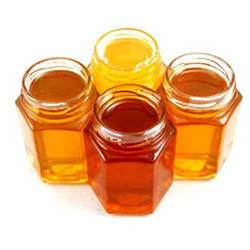
Color and Flavor of Honey
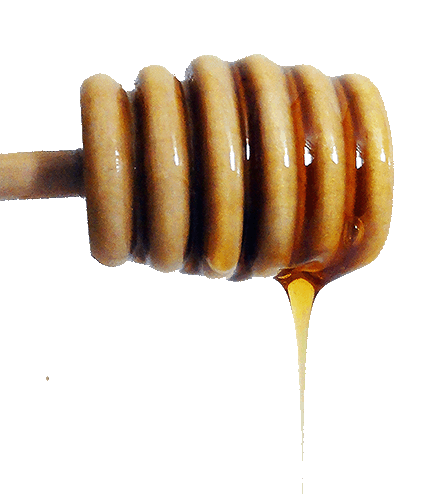 Color is used in the honey industry as a convenient measure of honey
flavour and aroma. Generally, lighter honeys have a milder flavor and
darker honeys have a more robust flavor. The color and flavour of honey
is largely determined by the
floral source of the nectar. However, exposure to heat and
storage time may affect honey's quality
and color. Normally, the darkening of honey occurs more rapidly when
honey is stored at high temperatures. Also, honey appears lighter in
color after it has granulated, which is why most creamed honeys are
opaque and light in color.
Color is used in the honey industry as a convenient measure of honey
flavour and aroma. Generally, lighter honeys have a milder flavor and
darker honeys have a more robust flavor. The color and flavour of honey
is largely determined by the
floral source of the nectar. However, exposure to heat and
storage time may affect honey's quality
and color. Normally, the darkening of honey occurs more rapidly when
honey is stored at high temperatures. Also, honey appears lighter in
color after it has granulated, which is why most creamed honeys are
opaque and light in color.
1) Get these facts straight to be clear about these terms and concepts - pure honey, creamed honey versus clear liquid honey, crystallisation of honey, honeycomb, monofloral varietals, darkening of honey, viscous versus runny honey, honey storage, and more in: Frequently Asked Information About Honey.
2) With so many terms such as raw, pure, organic, etc, buying honey can be tricky. My take on Which Honey to Buy?
3) Read about my online find: Really Raw Honey!
4) Does wild honey really taste sour? And does it produce a clear solution when mixed with water? Wild Honey Questions. Need Your Help!
5) Honey claims and labels can be confusing. Get tips that would lend you some clues about honey labelling: Natural Honey, Pure Honey, Raw Honey ~ Making Sense of Honey Labels.
6) Learn about issues related to honey crystallization, pasteurization, and get the best tips for handling and storing honey: Honey Storage Tips.
Our Honey is all made with natural, Direct from source locally. Let us know if you have dietary restrictions - our friendly staff will help you find just the meal you want.
Customer Reviews
"This is sample review from a sample source." -- Sample Client, Location
"This is another sample review from another sample source." -- Sample Client, Location
3, Femi Olasanye Owutu Agric Ikorodu 3, Femi Olasanye Owutu Agric Ikorodu, Ikorodu, lagos | +23464296913 |